
Is there a need for enlightenment and a reinterpretation of the discourse of the Holy Quran?
Introduction:
The question of enlightenment is one of the most sensitive questions in Arab thought for a long time. The question comes not merely as a need to recover a Western term that was attached to the European Renaissance, but as a question about the essence of man’s relationship with knowledge and his ability to rediscover the goals and purposes of the Qur’anic text from within it and not through inherited, impotent mediations. The question is not so much about the “light” that the Enlightenment sheds as it is about the “darkness” that allowed the absence of the Enlightenment and its movement through time and space, i.e. the accumulation of centuries in which the door of understanding was closed and the task of thinking was entrusted to a specific group of men who monopolized speaking in the name of religion under the pretense of specialization.
Talking about enlightenment in the Arab context does not necessarily mean a call to imitate “the Western experience that started from a sharp break with religious texts represented by the Church.” Rather, it is a search for a renewed awareness of religion itself; a renewal that restores reason to its natural role as a tool for understanding the divine discourse, not an adversary to it. Enlightenment is not a conflict with the text, but rather an emanation from the text, as reason cannot depart from the source that guided it. In this sense, the Islamic enlightenment that we call for is in fact a resumption, not a break; a resumption of the role of man as a reader and responsible for its reflection, as God intended when He said:
“Do they not study the Qur’an, or do they have closed hearts?” (Muhammad: 24).
For centuries, religious knowledge was confined to a narrow circle of people who represented the official religious establishment, until the image of the “scholar” and the “sheikh” merged, as if understanding and knowing the truth could only be achieved by those who studied in colleges of Sharia and Islamic studies or belonged to “religious” institutes. With this exclusivity, knowledge became a power, and power became a guardianship over minds. The layman did not dare to think outside of what he was taught, and religion became a system of indoctrination rather than a system of thinking.
However, the contemporary world, with its digital explosion, has turned this hierarchy upside down. The recipient is no longer a prisoner of the pulpit, the paper fatwa, or the cassette tape, but has his own windows to the world: He watches, analyzes, compares, and produces alternative knowledge that rereads the Qur’anic text with a new rational approach. This is precisely the urgent need for “enlightenment” to rearrange the relationship between man and text, between religion and reason, and between heritage and reality; an enlightenment that does not exclude religion, but liberates it from those who have made it their monopoly and guardians.
Chapter One: The Concept of Enlightenment
Between Western Legacy and Islamic Consciousness
The term “Enlightenment” in its European origin was associated with a philosophical and social movement that aimed to liberate man from the authority of the church and feudalism, and its most prominent slogan was “know yourself and believe only what your mind perceives.” The Islamic context is more complex, because the relationship between revelation and reason has never been an antagonistic one, but rather one of correlation and complementarity. In the Islamic context, the matter is more complex, because the relationship between revelation and reason has never been one of antagonism, but rather one of complementarity.
The Qur’an does not present itself as a mysterious text to be unconsciously accepted, but rather as an open text that invites man to consider and reflect, as in the words of Almighty God:
(Al-Ankabut: 20).
The Almighty says: “There are signs for those who think” (Rum: 21.
The essence of enlightenment in the Islamic concept It is not based on revolt against revelation, but rather on revolt against the media that have neutralized the effectiveness of revelation and placed themselves in a position of guardianship over it. When the text becomes a material to be repeated, man loses his ability to interact with it as a living, renewable organism, and religion itself becomes in need of revitalization. Enlightenment is not a rejection of what was, but a critique of what has been accumulated. There is a subtle difference between attacking the text and removing the dust of explanations that have obscured its light.
Islamic history has produced multiple schools of thought, each of which tried to interpret the text according to its own tools and methods, but most of these tools arose in limited temporal environments and according to linguistic and social data that were valid for their time. Over time, these tools turned into “sacred methodologies” that cannot be transgressed, until the sciences of the Quran, tafsir, jurisprudence and hadith became as if they were texts parallel to revelation, recited, explained and taught without real review of the foundations on which they were based, and herein lies the paradox!!!
While the Qur’an calls for renewal in looking, the very tools of looking have been frozen.
Hence, the need for enlightenment is not a comparison with the Enlightenment in the West, but a necessity required by reality. It is also not a call to demolish the old, but to question it and redefine the relationship between the text and its methods. Religious consciousness that does not review its tools becomes a hollow repetition, repeating the same concepts formulated by ancestors in eras completely different from our reality, while the Qur’anic text is by its very nature renewable, accommodating every time and place, and speaking only to those who contemplate it in its changing context.
Chapter two: The Shifting Center of Religious Knowledge
From Sheikh to Thinker:
When we look at the map of religious awareness in the Arab and Islamic world, we discover that the concept of “scholar” or “religious knowledge” remained for centuries associated with the traditional figure of the sheikh, a man who studied the sciences of jurisprudence and interpretation in religious institutes and Islamic universities. In the eyes of the public, he became a representative of legitimate authority and the sole voice of truth, and with the accumulation of ignorance and successive generations, this image turned into a deep mental structure in the collective imagination, until religiosity itself was almost measured by how close to the speech or commitment to his fatwa.
However, this model gradually began to crack with the social and technological transformations of the 21st century. Social media, video platforms, and digital content have redistributed the balance of knowledge. A new type of religious and intellectual speaker has emerged, not from traditional institutions, but from other scientific fields such as engineering, medicine, physics, psychology, and modern philosophy.
On the face of it, this may seem like a departure, but in essence it is a return to the original: The Qur’an does not associate reflection with institutional affiliation, but with free mental action. He says:
“A blessed Book which we have sent down to you, that they may study its verses, and that those who are wise may remember” (p: 29).
The call is addressed to “those who have the ability to see and think,” not to “people of fatwa,” and to anyone who has the ability to look and think, whatever their field or specialty.
This shift represented a new paradigm for the relationship with the discourse of revelation, based on rediscovering it through the tools of modern science and critical thinking methodologies. When an engineer approaches the Qur’an with an organized mind that knows the laws of consistency and design, he sees in it a precise system that governs the engineering existence that he studied and specialized in. The psychiatrist, when he contemplates the discourse of the psyche in the Holy Book, finds in it an integrated science of consciousness, disorder, and equilibrium. Thus, we are beginning to see a new religious discourse that is closer to reality and less subject to tradition.
New thinkers such as Dr. Muhammad Shahrour, Sbeit al-Nili, Abulqasim al-Hajj Hamad, and others constituted a milestone in this transformation. Shahrour, for example, did not come with a reading against the text, but rather a reading from within it, based on rigorous rational tools in analyzing words, context, and concepts, redefining many of the terms that had been wrongly settled in the Islamic mind for centuries.
Shahrour was not alone in this trend, but he was the most influential, because he provided the public with new tools with which they could read the text themselves without mediation or guardianship, and religion moved from the “pulpit” to the “phone screens” and from the “sermon” to the “consciousness” from the pulpit to the phone screen, and from the sermon to the consciousness
In essence, this shift was a step towards the “democratization of religious understanding,” i.e. making religious knowledge available to anyone who possesses the tools of reasoning, rather than the monopoly of a closed class. Perhaps the most serious revelation of this new reality is the fragility of the preaching discourse that has been presented on pulpits for centuries without development, as it was discovered to be an emotional, sentimental discourse that stirs emotions rather than minds.
As the sermon ends, the heat of preaching dissipates, and life remains the same; because the conviction has not changed, and the behavior has not been built on a new cognitive realization, and human behavior in his work environment and interaction changes by changing his internal convictions, not just the transient emotional sensations and feelings from a fleeting speech that depends on the body language and tone of voice.
The enlightenment required today does not mean the exclusion of traditional scholars, but rather their openness to and development of the tools of new thinkers, and their freedom from the idea of possessing absolute truth. Religion is not an institution, but a movement of consciousness that is renewed by the renewal of its tools within the movement of societies.
Hence, the most dangerous thing that faced Islamic thought was not atheism or the West, but the “rigidity of the tool” that kept repeating the same premises and waiting for different results, as Einstein once said: “It is stupid to repeat the same thing and expect new results.”
AlfConnect the third:
The crisis of understanding tools between text and heritage
What confronts contemporary Islamic thought is not a crisis in the Qur’anic text, but a crisis in the tool with which we deal with it. The Qur’an is still a text that is open to all times, alive as long as it is read in the light of reason and experience. But the biggest issue is that the tools of understanding that we inherited from classical times are frozen in time and have themselves become an obstacle to the interaction of the text with reality.
The sciences of the Qur’an and Usul al-Fiqh arose in a specific historical environment that carried a clear intellectual, social, and political specificity. These sciences were initially a response to an urgent epistemological need to organize religious understanding in society, but over time they turned into closed systems, repeating themselves and preventing innovation under the pretext of “preserving and protecting religion”. Concepts such as “nasakh and mansukh”, “Makki and Madani”, “reasons for revelation”, “readings”, “muhkam and mutashahab” have not been re-read, deconstructed and analyzed again in light of the development of modern sciences or the expansion of human consciousness, but have remained the same for more than a thousand years.
These tools, despite their historical value, are now insufficient for understanding discourse and text in a new epistemological context. They were produced at a time when knowledge was based on transmission, while today we are in an age where scientific methods are based on experimentation, proof, and measurement. How can we continue to read the Qur’an with the eyes of the past, when we live in an age where concepts change every day?
The dominant religious discourse has continued to sanctify the tool more than the truth for which it was created, and anyone who tries to review these tools is labeled a heretic, a disbeliever, or a departure from consensus. Thus, a “methodological isolation” and epistemological stagnation arose between the text and reality, not because of the Qur’an, but because of the methods and tools of understanding itself.
When we look at the history of Islamic thought, we see that stagnation was not an inevitable fate, but rather a human choice. When Imam al-Shafi’i founded the science of Usul al-Fiqh, he did not intend to close the door to ijtihad, but rather to open a methodology for scholars to think systematically about the texts. But what happened later is that this methodology turned from a “means of understanding” to an “end in itself,” so that its rules became a higher authority than the text itself! In some cases, revelation is judged by it instead of being judged by it.
In this context, we can say that reproducing the Qur’anic sciences does not mean destroying the heritage, but rather completing what was started by the first, but with a new approach, commensurate with the evolution of human consciousness. History is not a burden to be carried, but an asset to be developed. The difference between those who worship the text and those who study it is that the former freezes the mind on what the predecessors said, while the latter activates the mind to realize God’s intention in his time according to the dialectic of the constant and the changing.
One of the biggest manifestations of the crisis is that most of what we call “sharia sciences” today are not directly related to the Quran, but rather to human interpretive readings based on it. The relationship between the text and these sciences is no longer one of foundation, but one of dependency. For this reason, the same concepts are repeated in all schools of interpretation: From al-Zarkashi to al-Suyuti, from al-Jarjani to al-Zarqani, until we live in a closed circle of knowledge that repeats the old in new forms and colors without producing original thought.
While the technological revolution has exposed this rigidity, it has also opened up a new horizon of consciousness. Today, the monopolization of knowledge is no longer possible; everyone can access the text, research it, compare interpretations, see contradictions, and form their own understanding based on reason and reflection. This is the “revolution of consciousness” that the traditional discourse is unable to grasp. It is a revolution that returns authority from the sheikh to the individual human being who is directly addressed by the text.
The crisis of understanding is not the belief in the existence of God, but in the mediator between man and God. As long as this intermediary clings to its old tools, renewal will remain a slogan that will not be realized according to those tools. When we dare to question these tools and redefine them according to the Qur’anic methodology, we will discover that the text does not fear innovation, but rather calls for it. God Almighty says:
“And Allah increases those who are guided in guidance” (Maryam: 76).
{And those who have strived within us, we will guide them in our paths, and God is with those who do good} [Surah Al-Ankabut: 69].
Guidance is a continuous upward movement in consciousness that never stops at a generation, curriculum, or school, nor should it.
Chapter Four: Toward a unified epistemological approach
We have already diagnosed the dilemma: The Qur’an is not the issue; the issue lies in the tools and practices by which it is read. The salvation is not through open interpretive chaos that produces conflicting and divergent results, nor by leaving the arena for every opinion holder to create whatever meanings he wants under the framework of freedom, as the Arabs say, “Saddah Maddah and Kala’a Mabah”, but these tools, standards and rules must be regulated from within the system of the discourse of the revelation itself, i.e. the establishment of a unified epistemological approach, not a rule of blind methodological obedience. This means establishing a unified epistemological approach, not based on blind methodological obedience, but on agreed-upon rules and mechanisms that derive from the spirit of the text and the requirements of the contemporary mind, and set boundaries that protect the text from “interpretive fission” and from turning it into a mirror of every personal tendency and “whims and purposes.”
Rationale for the standardized curriculum:
First: A unified methodology reduces interpretive chaos and restores security to religious discourse. When there are agreed upon inductive mechanisms, the randomness of disparate claims is minimized; not because the methodology eliminates disagreement, but because disagreement becomes part of clear rules that measure the quality of the argument and its consistency with the text, its context, and its linguistic structure.
II: Standardizing the curriculum protects the text from “symbolic appropriation”
This prevents and minimizes the transformation of verses and contexts into elastic symbols that are exploited to serve ideological interests or private psychological experiences. When there are common tools for reading semantics, context, and linguistic and rhetorical function, it becomes more difficult to hijack meaning, and society is better able to distinguish between normal reading and ambiguous reading.
Third: The unified approach allows interactive channels between specialists from multiple fields of knowledge, including applied scientists, linguists, philosophers, sociologists, psychologists, and researchers in the natural sciences, so that each tool enriches the reading of the other. This interdisciplinary partnership produces multidimensional readings and distances the reading of the verse from its narrow historical dimension and closed ideology, which is what we find under the Qur’anic terms “those who are well established in knowledge” and “those who have acquired knowledge”.
Proposed solutions for a unified cognitive approach
(approximate rather than detailed framework)
I refer here to framework elements that should be part of any unified project, while recognizing that detailed mechanisms and tools require extensive dialogue:
- The primacy of the text and its linguistic structure: A reading that derives meaning from within the structure of the verse and the context and does not import dominant external references without a clear textual justification. Any interpretation that does not begin by presenting the structure and rhetorical functions of the verse is incomplete.
- The context of reception is not the only context of interpretation:
The reading deals with the historical and linguistic context, but does not make history an absolute constraint; the verse has functional dimensions that go beyond the circumstances of the revelation to general cognitive and ethical systems.
- Multiple and complementary means of signaling: Linguistic rules, the general Quranic context, verbal clues surrounding the specific context, historical narratives attributed to the Prophet in his first interaction that are reliable as a statement rather than a parallel source, controls of reason and analogy, and consideration of contemporary realities. This integration prevents a single tool from turning the text into a monolithic draft.
- Transparency of the methodology: Every reader, scholar, and reflector declares his or her tools and premises when presenting his or her reading: What concepts did he adopt? What is the criterion for acceptance and rejection? This principle minimizes absolute claims and makes the dialogue critical and organized.
- A collective review mechanism: Establishing multidisciplinary scientific committees or councils that follow up on new readings and issue a systematic evaluation, not a coercive censorship body, but an evaluative reference that assesses the extent to which the reading adheres to the standards of the text and the methodology.
If the arena remains open to every interpretive “style” – esoteric, symbolic, psychological, deconstructionist, literalist, or even interpretations linked to political interests – we will witness further fragmentation: Each calling from his own squadron, interpreting the text in favor of his own position or project. The result is not a healthy multiplicity of ideas, but a fragmentation that loses the nation’s ability to practically use the Quran to build collective consciousness. The conclusion of this chapter is that intellectual actors must unite on a unified mechanism, methodology, and tools so that difference does not turn into cognitive chaos.
Conclusion / The need for action:
If enlightenment in the sense that we carry it here means that the mind returns to its natural place as a partner rather than an enemy of the text, then the unified approach is the structure that allows it to do so without chaos. What is required is not a break with the heritage, but a purification of the heritage and reading it as an asset to be developed; what is required is not the obliteration of difference, but the refinement of the tools of difference. The first step in this process is a general agreement – among researchers, scholars, practitioners, and intellectuals – on common rules of engagement that safeguard the text and preserve the freedom of thought.
The digital revolution has dazzled us with immense possibilities for spreading knowledge and reading, but it has also exposed the fragility of the power of old media. Our call today is not for exclusion or disengagement, but for a new epistemological foundation: A unified, transparent, and pluralistic approach within the scope of controls. When we succeed, enlightenment will be transformed from an introspective word cloaked in the garb of conspiracy to a practical project. Only then will the Qur’an regain its true status as a source of moving consciousness, a base for civilizational renewal, and a basis for a conviction that produces real behavior in life, so that prayer is performed in its Qur’anic sense and zakat is also paid in its Qur’anic sense.
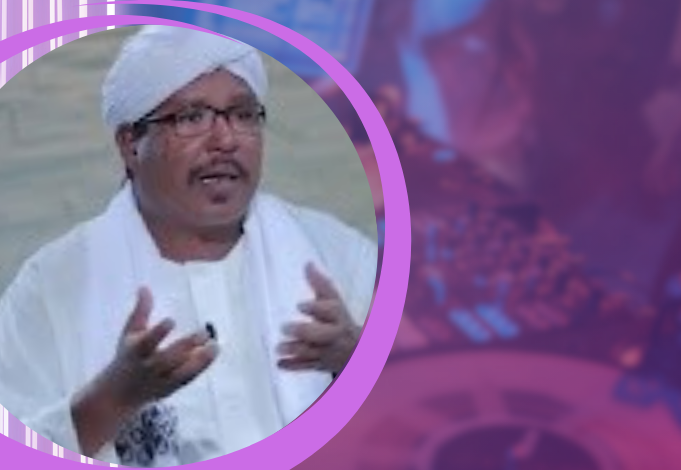
Sudanese thinker and researcher:
Yasir al-Adirgawi